
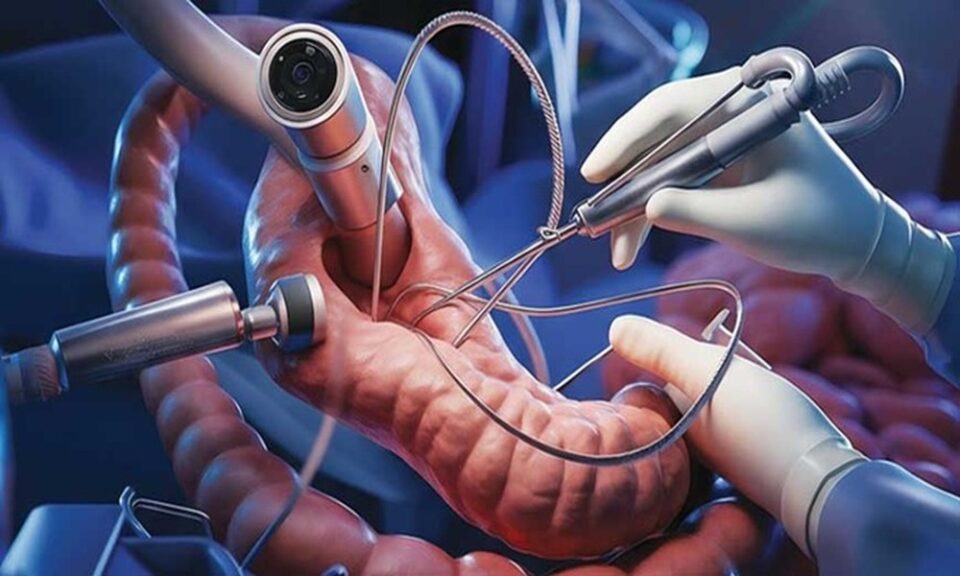
AMT endoscopy solutions deliver the miniature metal components that make flexible and rigid endoscopes function with the precision surgeons require. Endoscopic procedures have replaced open surgery for many diagnostic and therapeutic interventions, reducing patient recovery times and hospital stays. The instruments that enable these procedures contain dozens of small, complex metal parts, each manufactured to tolerances measured in hundredths of a millimetre. AMT, a Singapore-based precision manufacturer, has built specific expertise in producing these components through metal injection moulding and secondary processing.
The Role of Precision Components in Endoscopic Devices
An endoscope channels light, images, fluids, and mechanical action through a tube narrow enough to pass through natural body openings or small incisions. Inside that tube, articulation mechanisms bend the distal tip in response to control-knob inputs. Biopsy channels guide forceps, snares, and brushes to target tissue. Fluid ports deliver irrigation and suction.
Critical Component Requirements
Each function depends on components that perform without interference in a confined space:
- Articulation rings must pivot smoothly under repeated load cycles.
- Jaw assemblies on biopsy forceps must close with consistent force and maintain alignment after thousands of actuations.
- Channel liners must resist abrasion from instrument passage while maintaining a smooth bore that prevents tissue snagging.
Manufacturing these parts requires processes capable of producing complex three-dimensional geometries at scale. Metal injection moulding meets this requirement by combining design freedom with production economics.
Metal Injection Moulding for Endoscope Components
MIM produces small, intricate metal parts by injecting a powder-binder feedstock into precision moulds, then removing the binder and sintering the part to near-full density. The process handles features such as internal channels, thin walls, and undercuts that conventional machining approaches with difficulty or prohibitive cost.
Alloys and Tooling Design
AMT applies MIM across its endoscopy component production, using stainless steel 17-4PH and 316L as primary alloys. These grades offer the corrosion resistance needed to survive repeated sterilisation by autoclaving or chemical immersion. After sintering, parts undergo heat treatment to achieve the hardness and tensile strength that each application demands.
Tooling design is critical. Mould cavities account for the 15 to 20 per cent linear shrinkage that occurs during sintering. Multi-cavity tools allow simultaneous production of several parts per cycle, improving throughput and reducing per-unit cost. AMT’s tooling engineers work from client CAD models to design moulds that balance fill behaviour, ejection, and dimensional control.
“Singapore will continue to invest in capabilities that help our manufacturers serve the global medtech industry.” Indranee Rajah, Minister in the Prime Minister’s Office and Second Minister for Finance
Secondary Processing and Surface Treatment
Sintered MIM parts often require secondary operations to meet final specifications.
Machining and Finishing
CNC machining adds features that the moulding process cannot achieve at the required tolerance, such as precision bores or threaded interfaces. Grinding and lapping bring critical surfaces to the flatness or roundness that mating components demand.
Surface Treatments
Surface treatment serves both functional and regulatory purposes:
- Electropolishing removes the thin layer of disturbed metal left by machining, creating a smooth, passive surface that resists corrosion and bacterial adhesion.
- Passivation in nitric or citric acid restores the chromium-oxide layer on stainless steel surfaces.
- Laser marking provides permanent identification on each part, with unique device identification codes, lot numbers, and manufacturer marks that survive repeated sterilisation cycles.
These treatments are standard practice for components that contact tissue or bodily fluids. Regulatory frameworks increasingly require traceability markings on individual components within reusable devices.
Quality Systems for Medical Endoscopy Parts
Endoscope components fall under medical device regulations that mandate controlled manufacturing environments and documented quality systems. AMT holds ISO 13485 certification, covering its MIM, machining, and assembly operations. The certification confirms that the company follows validated processes, maintains calibrated equipment, and tracks every lot from raw material through finished goods.
Inspection and Testing
Inspection protocols for endoscopy parts include:
- Coordinate-measuring-machine verification of critical dimensions
- Surface-roughness measurement using profilometers
- Visual inspection under magnification for burrs, cracks, or surface defects
- Destructive testing on sample parts from each lot to confirm mechanical properties through hardness testing, tensile testing, and metallographic analysis
Cleanroom areas within AMT’s facility handle final inspection and packaging of components destined for sterile or clean assembly by the device manufacturer. Environmental monitoring logs particle counts and microbial levels to verify that conditions remain within classification limits.
Design Collaboration and Development Support
Endoscope manufacturers often refine component designs through several iterations before locking specifications for volume production. AMT’s engineering team participates in this process by advising on MIM design rules, recommending alloy selections, and producing prototype lots for functional testing.
Design for Manufacturability
Design-for-manufacturability reviews identify features that may cause moulding defects, excessive tool wear, or inconsistent sintering. Adjusting wall thicknesses, adding draft angles, or repositioning gates at the design stage avoids costly revisions after tooling fabrication. This collaborative model reduces the number of iteration cycles and compresses the timeline from concept to qualified production.
AMT also supports bridge production for endoscopy device programmes transitioning from clinical trials to commercial launch. During this phase, volumes increase from hundreds to thousands of units per month, and the manufacturer must scale without compromising the dimensional and material specifications validated during earlier lots.
Why Singapore for Endoscopy Component Manufacturing
Singapore offers a combination of technical infrastructure, regulatory alignment, and logistical efficiency that benefits endoscopy manufacturers. The country’s Health Sciences Authority aligns its device-registration framework with FDA and EU MDR standards, simplifying multi-market compliance. Intellectual-property protections rank among the strongest in Asia, and free-trade agreements reduce tariff barriers for finished components shipped to major markets.
AMT endoscopy solutions provide device companies with a vertically integrated source for precision endoscope components, from feedstock preparation through finished, inspected parts ready for device assembly.
