
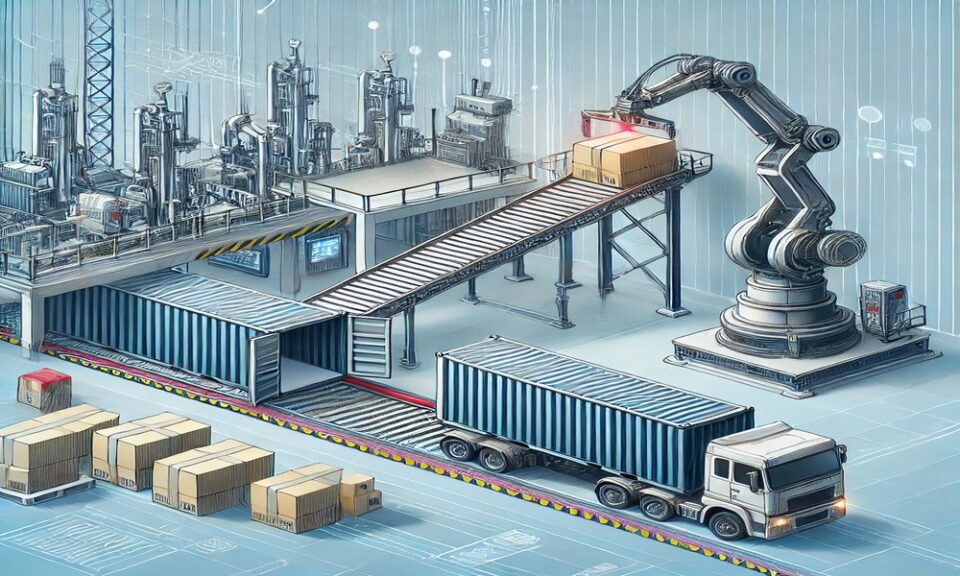
Food and beverage plants are continuously pressured to enhance efficiency, ensure product quality, and cut labor costs. As production volumes continue to increase, automated palletizing and depalletizing systems have become essential tools for modern manufacturing operations.
These systems help factories streamline material handling processes while improving productivity and workplace safety.
The Growing Demand for Automation in Food & Beverage Manufacturing
The food and beverage industry handles a wide variety of products, including bottled drinks, canned beverages, cartons, bags, and packaged foods. Handling these products manually can be time-consuming and inefficient, particularly in high-volume production settings.
Traditional palletizing and depalletizing operations often involve repetitive lifting, stacking, and unloading tasks. These processes not only slow down production efficiency but also increase the risk of worker fatigue and injuries.
To address these challenges, many manufacturers are investing in automated palletizer and depalletizer solutions that can operate continuously with high precision and reliability.
What Are Palletizer and Depalletizer Systems?
A palletizer is an automated machine that organizes and stacks products onto pallets for storage or transportation. A depalletizer carries out the reverse process by removing products from pallets and supplying them to production or packaging lines.
These systems are commonly used in food and beverage plants for handling:
- Bottled water and soft drinks
- Beer and canned beverages
- Milk and dairy products
- Snack foods and packaged products
- Cartons and corrugated boxes
- Bagged ingredients such as sugar, flour, or rice
Modern robotic systems can handle different package sizes and stacking patterns with minimal manual intervention.
Improving Production Efficiency
One of the biggest advantages of palletizer and depalletizer systems is the significant improvement in production efficiency.
Automated systems can work continuously at high speeds, helping factories maintain stable production flow without interruptions caused by manual handling limitations.
For example, robotic palletizers can:
- Increase stacking speed
- Reduce product handling time
- Improve pallet loading consistency
- Minimize operational bottlenecks
- Support 24/7 production operations
Many factories also combine palletizing equipment with an Automatic Loading and Unloading System to create a fully integrated material handling solution from production to warehouse logistics.
Reducing Labor Costs and Workforce Pressure
Labor shortages are becoming a major challenge for many food and beverage manufacturers. Repetitive palletizing and depalletizing work is physically demanding, which makes it challenging to attract and retain employees for these roles.
Automation helps businesses reduce reliance on manual labor while improving operational stability. Instead of assigning large teams to repetitive handling tasks, employees can focus on equipment monitoring, quality control, and production management.
Over time, automated systems can significantly reduce labor costs while increasing overall factory productivity.
Enhancing Workplace Safety
Food and beverage factories often operate at high production speeds, which can create safety risks during manual material handling.
Workers involved in palletizing operations frequently perform repetitive lifting, bending, and twisting motions, increasing the likelihood of workplace injuries.
Automated palletizer and depalletizer systems help improve workplace safety by minimizing direct human involvement in heavy lifting tasks. Modern systems are also equipped with:
- Safety guarding
- Emergency stop systems
- Intelligent motion control
- Collision detection sensors
Safer working conditions not only protect employees but also reduce downtime and compensation-related expenses.
Flexible Solutions for Different Production Needs
Food and beverage factories typically handle multiple product types and packaging formats. Flexible automation solutions are essential for adapting to changing production requirements.
Modern robotic palletizers and depalletizers can be programmed for different:
- Pallet patterns
- Product dimensions
- Carton sizes
- Bottle configurations
- Production line speeds
Some advanced systems also use AI vision technology to identify products and adjust handling positions automatically.
This flexibility allows manufacturers to improve operational efficiency while supporting future production expansion.
Integration with Smart Factory Systems
As Industry 4.0 technologies continue to develop, palletizer and depalletizer systems are becoming more intelligent and connected.
Many automated systems can now integrate with:
- Conveyor systems
- Warehouse management systems
- AGVs and AMRs
- Packaging lines
- Quality inspection systems
Factories that implement a complete Automatic Loading and Unloading System can achieve smoother logistics coordination between production, storage, and shipping operations.
Real-time monitoring and data analysis also help manufacturers optimize equipment performance and reduce operational downtime.
Applications Across the Food & Beverage Industry
Automated palletizing and depalletizing systems are widely used in various food and beverage sectors, including:
Whether handling fragile bottles or heavy cartons, automated systems provide stable and efficient material handling solutions for modern production facilities.
Conclusion
Palletizer and depalletizer solutions are transforming food and beverage factories by improving efficiency, reducing labor dependency, and enhancing workplace safety. As production demands continue to grow, automation is becoming an essential investment for manufacturers seeking long-term competitiveness.
With the continued advancement of robotics, AI vision, and smart factory technologies, automated material handling systems will play an even greater role in shaping the future of food and beverage manufacturing.
