
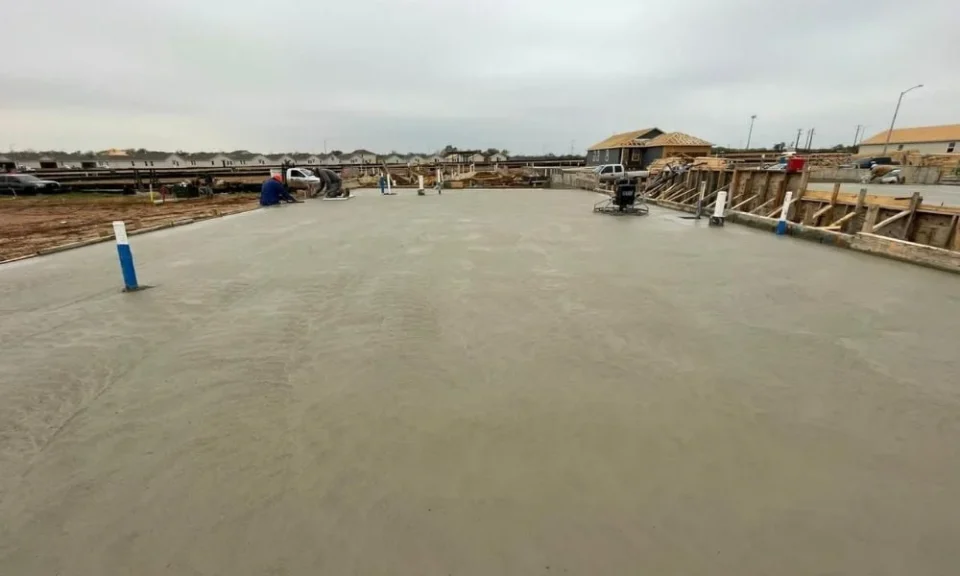
The budget conversation for outdoor projects often starts with a number heard from a neighbor. They rarely survive contact with actual variables. The concrete patio contractor pricing varies considerably based on site conditions, design choices, local labor rates, and material costs based on what the homeowner wants.
Size drives cost
Square footage is the starting point for every patio estimate, but it isn’t the only factor that moves the number. A larger plain slab and a smaller decorative one can land at similar final costs because the finishing work on a stamped or colored surface adds labor time that square footage alone doesn’t capture. Base price ranges across different project scopes typically look like this:
- Small patios under 200 square feet running at the lower end of the residential range
- Mid-size patios between 200 and 400 square feet represent the most common residential scope
- Large patios above 400 square feet, where material volume and crew time both increase proportionally
- Multi-level designs adding formwork complexity and pour sequencing that pushes costs higher regardless of total area
- Irregular shapes with curves or custom edges requiring additional forming time beyond standard rectangular layouts
Getting an accurate cost per square foot means nothing without knowing which finish, which base preparation depth, and which site conditions apply to your specific project.
Finish selection impact
Plain broom finish sits at the accessible end of the cost spectrum. The pour happens, the surface gets textured, and the work wraps without additional material or labor beyond the base installation. Exposed aggregate adds the step of removing surface paste while the concrete is still workable, which requires timing precision and adds to the finishing labor total. Stamped concrete carries the highest finishing cost within standard residential options. For the same square footage, pattern tools, colour hardeners, release agents, and hand labour all contribute to the high price. A patio that contributes to property aesthetics rather than merely providing a functional surface justifies that cost.
Site preparation variables
What sits on the ground before work begins directly affects what the project costs to complete? A backyard that’s already clear and relatively flat requires straightforward sub-base preparation. One with existing concrete to remove, significant grading work, or drainage challenges that need engineered solutions adds cost before any forming or pouring begins. Soil conditions matter as well. Expansive clay soils require deeper sub-base preparation than stable compacted ground. Contractors who assess the site properly before quoting reflect these variables in their estimates. Quotes that don’t account for site-specific preparation conditions tend to carry change orders once work is underway.
Getting accurate estimates
Three on-site quotes from contractors who’ve physically walked the project area give far more useful information than online calculators or general price guides. The same site may be interpreted differently by each contractor, and the approaches and costs may differ. It reveals both the price range and the reasoning behind each contractor’s approach. Comparing detailed written quotes separates sub-base preparation, materials, labor, and finishing. Lump-sum figures without breakdown make it genuinely difficult to assess what each quote actually includes. Homeowners who push for itemized estimates before committing consistently make better-informed decisions and face fewer surprises once work gets underway.
